

Preview Event May 8th 6-9pm
Exhibition continues May 9th - June 6th
Curated by Yuli Serfaty & Xxijra Hii ft. works by Arvida Byström, Romeo Roxman Gatt, Harrison Pearce and Reb Sangster.
Caremaxxing opens with a word. Two words, in fact, symptoms of their episteme fused under pressure: care and maxxing. To maxx is to hack the system, to cheat the level, and to do it to the absolute extreme, all skill points assigned to one attribute. Care, a term with a long political and feminist history of labor, of bodies, of collective life, is what gets seized, rebranded and run through that logic. To caremaxx is to ruthlessly optimise care itself. Self-optimization to the MAX.
But what are we optimizing for? Community. Intimacy. Belonging. These have already been packaged and made into products to manage and customize in what Paul B. Preciado calls the pharmacopornographic regime. Bodies as resources to manipulate, power slipped under the skin: a patch, a pill, a syringe.
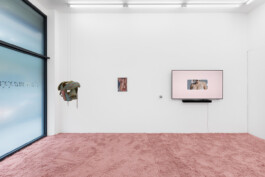
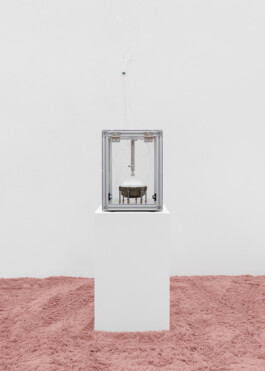
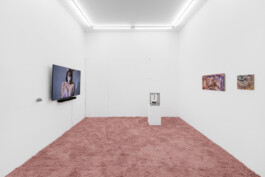
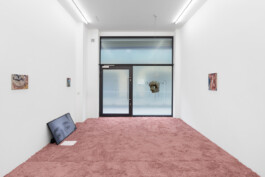
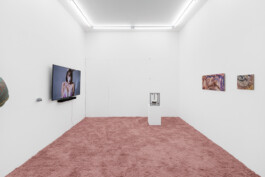
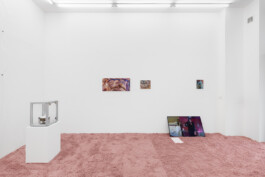
This exhibition takes the mechanization of care as both a cultural condition and a formal one: its works are built from the surfaces, systems, and vernaculars through which care is produced and consumed. The artists in this exhibition do not stand outside this condition. Their works are made from its machinery, from silicone and algorithms, paint and armor, text and treatment.
Caremaxxing has emerged in a pressure cooker of global conflict and algorithmic intimacy. An environment in which the drive toward community takes on a desperate urgency that requires full commitment, more pain-more gain, a ponzi scheme of belonging. What does care look like when it passes through a system that was never designed for it?
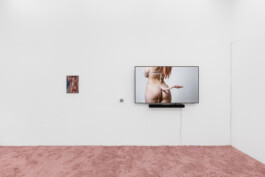
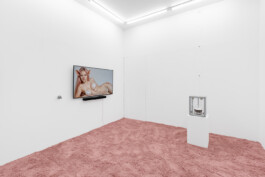
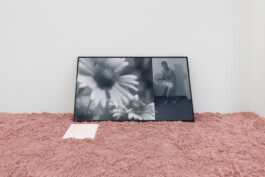
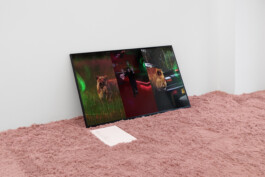
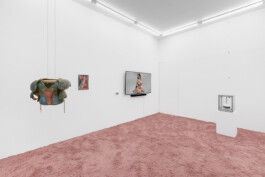
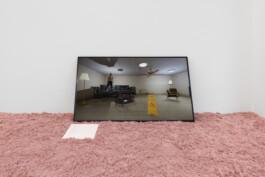
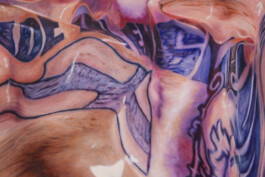
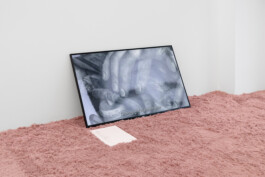
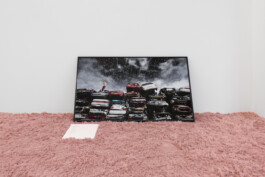
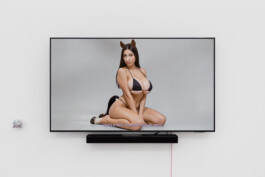
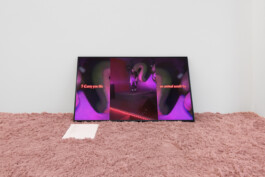
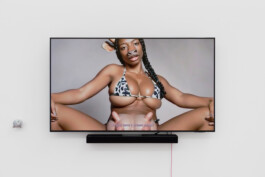
Arvida Byström’s PET (2025) is a six-minute video populated by sexualized human-animal hybrids trained on male longing. These figures offer something between a companion and a fantasy. They evoke the unconditional quality of a pet’s love mixed with a therapist’s training; transference is inevitable. PET asks what it means when emotional labor is automated and a better than nothing relationship becomes better than anything.
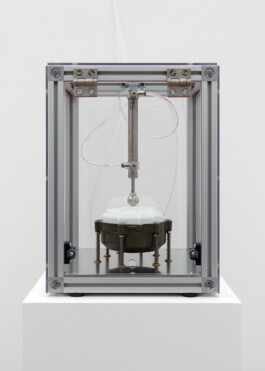
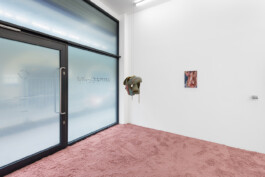
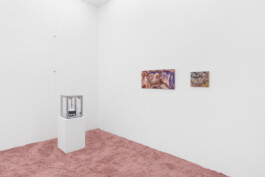
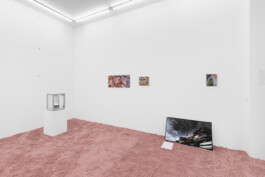
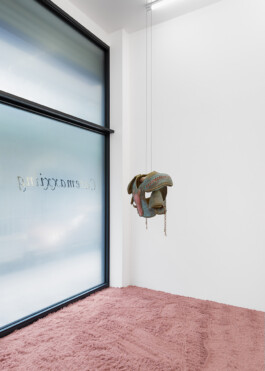
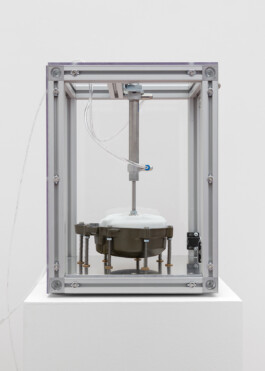
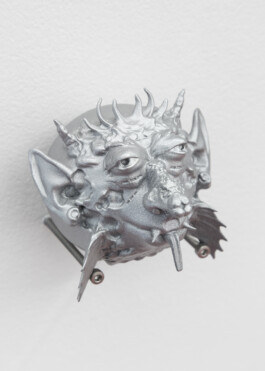
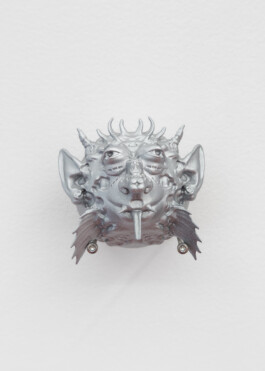
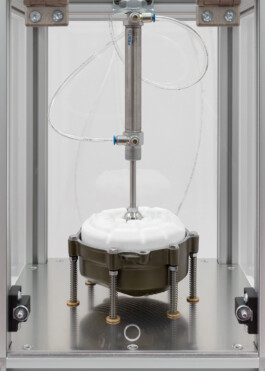
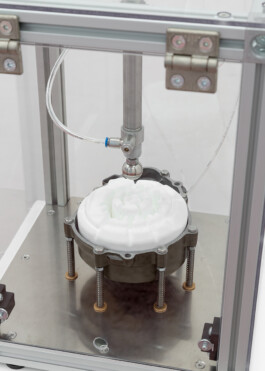
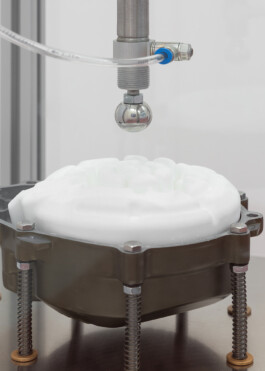
Harrison Pearce’s kinetic sculptures stage a different intimacy. Unyielding industrial materials frame soft silicone forms, simultaneously cradled and stimulated by pneumatic pistons. The actuator appears to care, to tend, to tease, to push into the body with something that simulates attention. The machine performs care with absolute fidelity to its choreography. Cleaned, oiled, and rested, it presses on.
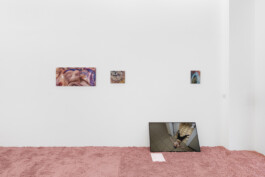
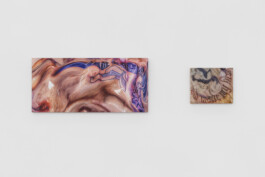
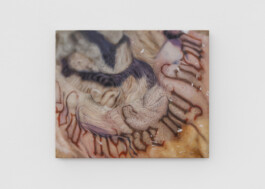
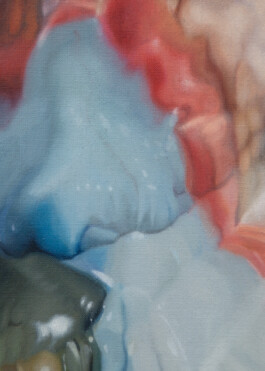
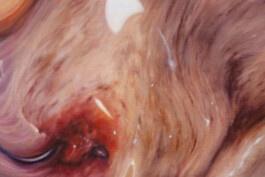
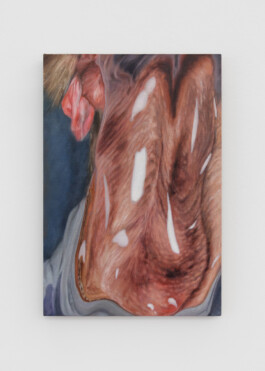
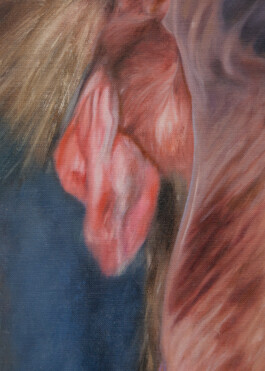
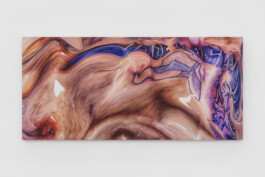
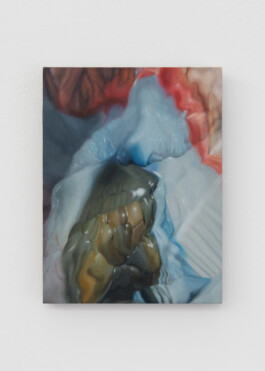
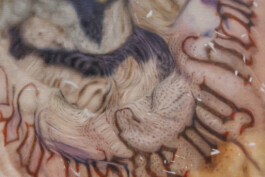
Reb Sangster’s paintings arrive at their surfaces through accumulated mediation. Internet sourced images are manipulated, negotiating between visual integrity and the digital sculpting software that corrupts it. New images are created from these renders and used as references for oil paintings, built in meticulous layers over weeks. The body of source materials is itself a body: passed through systems of optimization until it glistens and melts, dripping, oversaturated, pushed past coherence by the processes designed to perfect it.
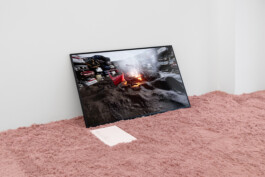
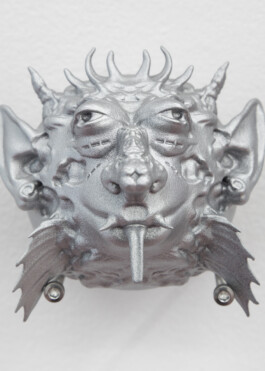
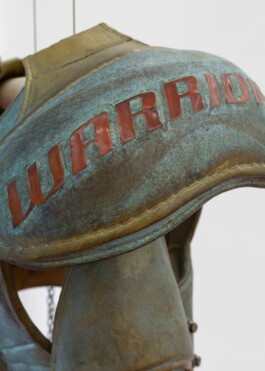
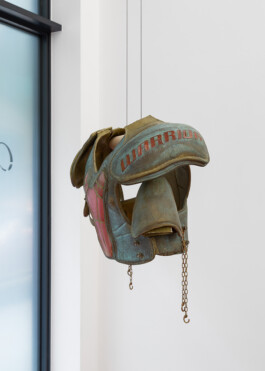
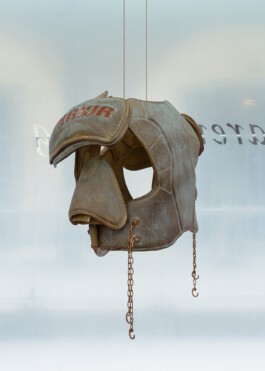
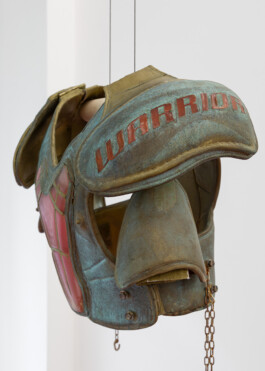
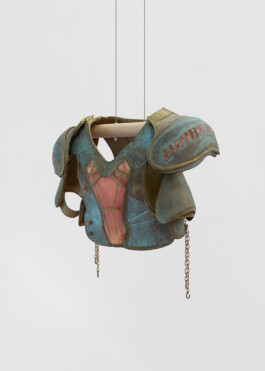
Romeo Roxman Gatt’s work returns the exhibition to language and to the bodies armored within it. The shoulder pad is the quintessential accessory for the ruthless and glorified performance of manhood: American football’s totem of masculinity, a sign you are not afraid of bashing your body into someone else’s. It is protective gear that actually means you can hit harder. The body is pressed into its mold, shaped by what is meant to protect it. Gatt’s sculptures, texts, and videos circle this paradox: the body crushed into a collective mold, armor as care, care as weapon, belonging as the price of protection.
Caremaxxing does not resolve the contradiction it names. The works in this exhibition are unstable compounds: bodies and materials mid-reaction, changed by contact, bearing the imprint of what pressed into them. A forced poetics, a language born of collision and then seized from the mechanics that produced it. To caremaxx is to submit care to the logic that empties it, and produce something the system didn't account for: comfortable in its opacity and untranslatability, refusing the demand to be fully legible. Its exhaustion is what the next community will be made from.
Text graciously contributed by Anitra Lourie
1. Maxxing derives from gaming culture's "min-maxing" — focusing all skill points on one ability essential to a character's success, at the expense of all others. Repurposed by incel communities, the term has migrated into broader internet vernacular, accumulating new users and altered meanings.
2. Preciado, P. B., “Pharmaco-pornographic Politics: Towards a New Gender Ecology,” Parallax, 14(1), 2008, pp. 105–117.
3. Glissant, É., Poetics of Relation, trans. Betsy Wing (Ann Arbor: University of Michigan Press, 1997).
--
Maxxing is not just an aesthetics versus success phenomenon. It is a social operating system, one that acts on the body by recoding softness, intimacy and vulnerability as things to be managed, maximised or overcome. Its power resides not simply in optimisation itself, but in its capacity to appropriate fundamental social desires for recognition, relation and orientation, only to reorganise them within extractive platform logics.
It teaches users to understand themselves, others and public life as optimisation issues: improve your face, your sleep, your productivity, your politics, your sexual value, your body chemistry, your attention span, your household, your worldview. In a maxxing culture, limits are treated as failures rather than conditions of living. That is why the consequences are not only psychosexual but also infrastructural, political and ecological. The body is where the system lands, but the system itself is the subject.
Maxxing does not sit alone. It often becomes a doorway into wider ideological ecosystems. Once optimisation becomes the governing logic, “enough” disappears. You do not just improve; you hardmaxx, softmaxx, sleepmaxx, biohack, stack, cleanse, cut, boost, grind. The platformed self is never complete because completion would end engagement.
This exhibition asks how algorithmic cultures produce dependency by collapsing care into optimisation, support into coaching, intimacy into metrics and politics into grievance and hierarchy. The desire to connect with others still persists but what these systems offer in its place are often deceptive forms of relation: engineered encounters that promise intimacy, guidance or belonging, while ultimately serving visibility, retention and capital. This exhibition therefore proposes not a soft alternative, but a counter-ethic of limits, maintenance, friction, interdependence and refusal. In this frame, the issue is not simply what people do to ‘optimise’, but what platform systems require bodies, relationships and environments to become in transformation. The works gathered here do not stand outside that condition; they move through it, trying to connect and to care within a culture that increasingly instrumentalises ‘maxx’ desires.
All enquiries to info@xxijrahii.net




Preview Event May 8th 6-9pm
Exhibition continues May 9th - June 6th
Curated by Yuli Serfaty & Xxijra Hii ft. works by Arvida Byström, Romeo Roxman Gatt, Harrison Pearce and Reb Sangster.
Caremaxxing opens with a word. Two words, in fact, symptoms of their episteme fused under pressure: care and maxxing. To maxx is to hack the system, to cheat the level, and to do it to the absolute extreme, all skill points assigned to one attribute. Care, a term with a long political and feminist history of labor, of bodies, of collective life, is what gets seized, rebranded and run through that logic. To caremaxx is to ruthlessly optimise care itself. Self-optimization to the MAX.
But what are we optimizing for? Community. Intimacy. Belonging. These have already been packaged and made into products to manage and customize in what Paul B. Preciado calls the pharmacopornographic regime. Bodies as resources to manipulate, power slipped under the skin: a patch, a pill, a syringe.
This exhibition takes the mechanization of care as both a cultural condition and a formal one: its works are built from the surfaces, systems, and vernaculars through which care is produced and consumed. The artists in this exhibition do not stand outside this condition. Their works are made from its machinery, from silicone and algorithms, paint and armor, text and treatment.
Caremaxxing has emerged in a pressure cooker of global conflict and algorithmic intimacy. An environment in which the drive toward community takes on a desperate urgency that requires full commitment, more pain-more gain, a ponzi scheme of belonging. What does care look like when it passes through a system that was never designed for it?
Arvida Byström’s PET (2025) is a six-minute video populated by sexualized human-animal hybrids trained on male longing. These figures offer something between a companion and a fantasy. They evoke the unconditional quality of a pet’s love mixed with a therapist’s training; transference is inevitable. PET asks what it means when emotional labor is automated and a better than nothing relationship becomes better than anything.
Harrison Pearce’s kinetic sculptures stage a different intimacy. Unyielding industrial materials frame soft silicone forms, simultaneously cradled and stimulated by pneumatic pistons. The actuator appears to care, to tend, to tease, to push into the body with something that simulates attention. The machine performs care with absolute fidelity to its choreography. Cleaned, oiled, and rested, it presses on.
Reb Sangster’s paintings arrive at their surfaces through accumulated mediation. Internet sourced images are manipulated, negotiating between visual integrity and the digital sculpting software that corrupts it. New images are created from these renders and used as references for oil paintings, built in meticulous layers over weeks. The body of source materials is itself a body: passed through systems of optimization until it glistens and melts, dripping, oversaturated, pushed past coherence by the processes designed to perfect it.
Romeo Roxman Gatt’s work returns the exhibition to language and to the bodies armored within it. The shoulder pad is the quintessential accessory for the ruthless and glorified performance of manhood: American football’s totem of masculinity, a sign you are not afraid of bashing your body into someone else’s. It is protective gear that actually means you can hit harder. The body is pressed into its mold, shaped by what is meant to protect it. Gatt’s sculptures, texts, and videos circle this paradox: the body crushed into a collective mold, armor as care, care as weapon, belonging as the price of protection.
Caremaxxing does not resolve the contradiction it names. The works in this exhibition are unstable compounds: bodies and materials mid-reaction, changed by contact, bearing the imprint of what pressed into them. A forced poetics, a language born of collision and then seized from the mechanics that produced it. To caremaxx is to submit care to the logic that empties it, and produce something the system didn't account for: comfortable in its opacity and untranslatability, refusing the demand to be fully legible. Its exhaustion is what the next community will be made from.
Text graciously contributed by Anitra Lourie
1. Maxxing derives from gaming culture's "min-maxing" — focusing all skill points on one ability essential to a character's success, at the expense of all others. Repurposed by incel communities, the term has migrated into broader internet vernacular, accumulating new users and altered meanings.
2. Preciado, P. B., “Pharmaco-pornographic Politics: Towards a New Gender Ecology,” Parallax, 14(1), 2008, pp. 105–117.
3. Glissant, É., Poetics of Relation, trans. Betsy Wing (Ann Arbor: University of Michigan Press, 1997).
--
Maxxing is not just an aesthetics versus success phenomenon. It is a social operating system, one that acts on the body by recoding softness, intimacy and vulnerability as things to be managed, maximised or overcome. Its power resides not simply in optimisation itself, but in its capacity to appropriate fundamental social desires for recognition, relation and orientation, only to reorganise them within extractive platform logics.
It teaches users to understand themselves, others and public life as optimisation issues: improve your face, your sleep, your productivity, your politics, your sexual value, your body chemistry, your attention span, your household, your worldview. In a maxxing culture, limits are treated as failures rather than conditions of living. That is why the consequences are not only psychosexual but also infrastructural, political and ecological. The body is where the system lands, but the system itself is the subject.
Maxxing does not sit alone. It often becomes a doorway into wider ideological ecosystems. Once optimisation becomes the governing logic, “enough” disappears. You do not just improve; you hardmaxx, softmaxx, sleepmaxx, biohack, stack, cleanse, cut, boost, grind. The platformed self is never complete because completion would end engagement.
This exhibition asks how algorithmic cultures produce dependency by collapsing care into optimisation, support into coaching, intimacy into metrics and politics into grievance and hierarchy. The desire to connect with others still persists but what these systems offer in its place are often deceptive forms of relation: engineered encounters that promise intimacy, guidance or belonging, while ultimately serving visibility, retention and capital. This exhibition therefore proposes not a soft alternative, but a counter-ethic of limits, maintenance, friction, interdependence and refusal. In this frame, the issue is not simply what people do to ‘optimise’, but what platform systems require bodies, relationships and environments to become in transformation. The works gathered here do not stand outside that condition; they move through it, trying to connect and to care within a culture that increasingly instrumentalises ‘maxx’ desires.
All enquiries to info@xxijrahii.net


Xxijra Hii
Enclave 4
50 Resolution Way,
London SE8 4AL
Xxijra Hii is a member of New Art Dealers Alliance (NADA) and the Gallery Climate Coalition (GCC).
Please do not add us to any mailing lists.